- All Products
- Solid-State Batteries
- S4R SolidScan™ T Series
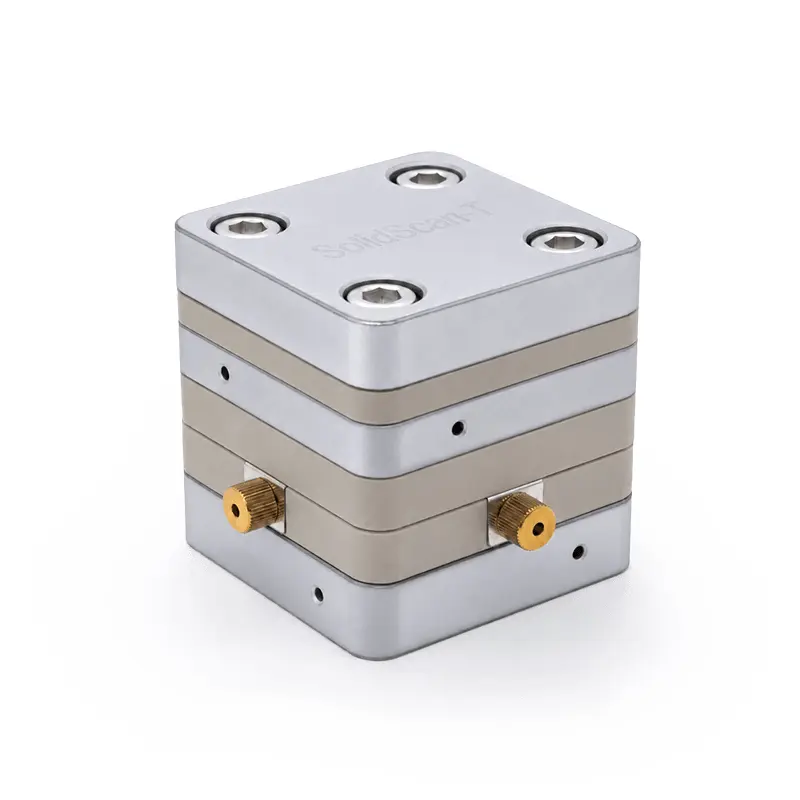
S4R SolidScan™ T Series
https://www.s4r.fr/shop/s4r-bat-ssb0002a-s4r-solidscantm-t-series-202 https://www.s4r.fr/web/image/product.template/202/image_1920?unique=cff4d79The S4R SolidScan-T Series is a compact three-electrode compression cell developed for electrode-resolved electrochemical characterization of all-solid-state battery materials, interfaces, and complete cell assemblies.
In a conventional two-electrode cell, the measured voltage includes contributions from both the working electrode and the counter electrode. The SolidScan-T incorporates a dedicated central reference connection which, when used with a suitably selected and sufficiently stable reference element, supports separate monitoring of the two main electrode potentials during galvanostatic cycling and electrochemical impedance measurements.
Its Ø10 mm architecture combines opposed compression pistons, hardened stainless steel 410 construction, hard chromium surface protection, PEEK electrical insulation, static FKM sample-chamber seals, and separate silicone sealing elements around the third-electrode plate. The fully disassemblable cell has external dimensions of 58 × 58 × 52 mm, a nominal mass of 650 g, and supports nominal preparatory pressures of up to 400 MPa using an external laboratory press.
The standard configuration is supplied with a stainless-steel reference contact. A gold reference contact or another customer-specified material may be integrated according to the intended electrochemical system. The stability and interpretation of the measured reference potential depend on the selected material, cell chemistry, stack configuration, and experimental preparation.
No account required. Add the products you need, then send your request to our technical sales team.
Request Pricing AccessAlready have an approved account? Sign in
S4R SolidScan‑T Series
The S4R SolidScan‑T Series is a compact three-electrode compression cell developed for electrode-resolved electrochemical characterization of all-solid-state battery materials, interfaces, and complete cell assemblies.
Its Ø10 mm architecture combines opposed compression pistons, a dedicated central reference connection, hardened stainless steel 410 construction, hard chromium surface protection, PEEK electrical insulation, and a tested static sealing system.
Electrode-resolved measurements in a compact compression platform
Designed for controlled assembly, separate electrode-potential monitoring, impedance investigations, and repeatable laboratory use.
Discriminate the contributions of the two main electrodes
In a conventional two-electrode cell, the measured voltage includes contributions from both the working electrode and the counter electrode. Their individual electrochemical behavior therefore cannot be distinguished from the overall cell voltage alone.
The SolidScan‑T introduces a dedicated reference connection intended for high-impedance potential measurement. When used with a suitably selected and sufficiently stable reference element, the configuration supports separate monitoring of the working- and counter-electrode potentials relative to the reference.
Opposed compression with an intermediate reference interface
The all-solid-state stack is assembled between upper and lower compression pistons. The dedicated reference contact reaches the intermediate region of the stack, with solid electrolyte positioned on both sides of the reference interface.
During preparation, an external laboratory press applies the required compaction force. After removal from the press, the fastening screws maintain a mechanical clamping load on the stack. The residual sample pressure is not measured directly and should not be assumed to remain equal to the preparatory pressure.
Configurable reference-contact material
The standard SolidScan‑T configuration is supplied with a stainless-steel reference contact. A gold reference contact or another customer-specified material may be integrated according to the intended electrochemical system.
The metallic contact provides electrical access to the reference region. The stability and meaning of the measured reference potential depend on the selected material, the electrochemical chemistry, the stack configuration, and the experimental preparation.
Hardened stainless steel 410 with PEEK insulation
The metallic structure and compression pistons are manufactured from hardened stainless steel 410 to support the axial loads generated during sample preparation and cell assembly.
A hard chromium surface treatment improves surface hardness and resistance to wear during repeated compression, assembly, disassembly, and cleaning operations.
Dedicated PEEK components provide electrical insulation and mechanical separation between the conductive sections of the cell.
Dedicated sealing for the sample chamber and third-electrode plate
Static FKM seals provide sealing between the two principal compression sections and isolate the sample chamber when the cell is correctly assembled.
Separate silicone sealing elements are used around the third-electrode plate assembly. This distinction allows the two sealing functions to be addressed independently within the three-electrode architecture.
Three independent Ø2 mm banana plug connections
Three Ø2 mm connection holes accommodate 2 mm banana plugs, providing separate electrical connections to the working electrode, counter electrode, and reference electrode.
The reference-electrode connection is intended for use with a high-input-impedance measurement channel, ensuring that only negligible current flows through the reference path during normal three-electrode operation.
Ø10 mm sample preparation up to 400 MPa
Nominal pressure is calculated from the force applied by the external laboratory press and the nominal compressed area of the sample.
| Sample Diameter | Nominal Area | Force at 400 MPa | Approximate Load |
|---|---|---|---|
| Ø10 mm | 78.54 mm² | 31.4 kN | 3.20 tf |
Advanced characterization of all-solid-state battery interfaces
Intended for research requiring electrode-specific information beyond the overall response of a conventional two-electrode cell.
Compact three-electrode construction
The cell has external dimensions of 58 × 58 × 52 mm and a nominal mass of 650 g.
S4R SolidScan‑T Series Specifications
| Product Type | Three-electrode all-solid-state electrochemical test cell |
|---|---|
| Cell Architecture | Opposed two-piston compression cell with intermediate reference connection |
| Electrical Configuration | Working electrode, counter electrode, and reference electrode |
| Sample Diameter | Ø10 mm |
| External Dimensions | 58 × 58 × 52 mm (H) |
| Nominal Cell Mass | 650 g |
| Metallic Material | Hardened stainless steel 410 |
| Surface Treatment | Hard chromium coating |
| Electrical Insulation | PEEK |
| Standard Reference Contact | Stainless steel |
| Alternative Reference Contact | Gold or customer-specified material, subject to compatibility review |
| Sample-Chamber Sealing | Static FKM seals |
| Third-Electrode Plate Sealing | Silicone sealing elements |
| Airtightness | Tested under the specified assembly conditions |
| Electrical Connections | 3 × Ø2 mm connection holes for 2 mm banana plugs |
| Nominal Compressed Area | 78.54 mm² |
| Preparatory Pressure Application | External laboratory press |
| Maximum Nominal Preparatory Pressure | Up to 400 MPa* |
| Force at 400 MPa | 31.4 kN, approximately 3.20 tf |
| Compression During Testing | Mechanical clamping load retained by fastening screws |
| Integrated Force Measurement | No |
| Integrated Pressure Monitoring | No |
| Torque Wrench | Available as an option |
| Operating Environment | Laboratory or controlled atmosphere according to material sensitivity |
| Maximum Operating Temperature | Up to 120 °C |
| Construction | Fully disassemblable for sample loading and cleaning |
Complete three-electrode cell assembly
S4R SolidScan‑T Series
The S4R SolidScan‑T Series is a compact three-electrode compression cell developed for electrode-resolved electrochemical characterization of all-solid-state battery materials, interfaces, and complete cell assemblies.
Its Ø10 mm architecture combines opposed compression pistons, a dedicated central reference connection, hardened stainless steel 410 construction, hard chromium surface protection, PEEK electrical insulation, and a tested static sealing system.
Electrode-resolved measurements in a compact compression platform
Designed for controlled assembly, separate electrode-potential monitoring, impedance investigations, and repeatable laboratory use.
Discriminate the contributions of the two main electrodes
In a conventional two-electrode cell, the measured voltage includes contributions from both the working electrode and the counter electrode. Their individual electrochemical behavior therefore cannot be distinguished from the overall cell voltage alone.
The SolidScan‑T introduces a dedicated reference connection intended for high-impedance potential measurement. When used with a suitably selected and sufficiently stable reference element, the configuration supports separate monitoring of the working- and counter-electrode potentials relative to the reference.
Opposed compression with an intermediate reference interface
The all-solid-state stack is assembled between upper and lower compression pistons. The dedicated reference contact reaches the intermediate region of the stack, with solid electrolyte positioned on both sides of the reference interface.
During preparation, an external laboratory press applies the required compaction force. After removal from the press, the fastening screws maintain a mechanical clamping load on the stack. The residual sample pressure is not measured directly and should not be assumed to remain equal to the preparatory pressure.
Configurable reference-contact material
The standard SolidScan‑T configuration is supplied with a stainless-steel reference contact. A gold reference contact or another customer-specified material may be integrated according to the intended electrochemical system.
The metallic contact provides electrical access to the reference region. The stability and meaning of the measured reference potential depend on the selected material, the electrochemical chemistry, the stack configuration, and the experimental preparation.
Hardened stainless steel 410 with PEEK insulation
The metallic structure and compression pistons are manufactured from hardened stainless steel 410 to support the axial loads generated during sample preparation and cell assembly.
A hard chromium surface treatment improves surface hardness and resistance to wear during repeated compression, assembly, disassembly, and cleaning operations.
Dedicated PEEK components provide electrical insulation and mechanical separation between the conductive sections of the cell.
Dedicated sealing for the sample chamber and third-electrode plate
Static FKM seals provide sealing between the two principal compression sections and isolate the sample chamber when the cell is correctly assembled.
Separate silicone sealing elements are used around the third-electrode plate assembly. This distinction allows the two sealing functions to be addressed independently within the three-electrode architecture.
Three independent Ø2 mm banana plug connections
Three Ø2 mm connection holes accommodate 2 mm banana plugs, providing separate electrical connections to the working electrode, counter electrode, and reference electrode.
The reference-electrode connection is intended for use with a high-input-impedance measurement channel, ensuring that only negligible current flows through the reference path during normal three-electrode operation.
Ø10 mm sample preparation up to 400 MPa
Nominal pressure is calculated from the force applied by the external laboratory press and the nominal compressed area of the sample.
| Sample Diameter | Nominal Area | Force at 400 MPa | Approximate Load |
|---|---|---|---|
| Ø10 mm | 78.54 mm² | 31.4 kN | 3.20 tf |
Advanced characterization of all-solid-state battery interfaces
Intended for research requiring electrode-specific information beyond the overall response of a conventional two-electrode cell.
Compact three-electrode construction
The cell has external dimensions of 58 × 58 × 52 mm and a nominal mass of 650 g.
S4R SolidScan‑T Series Specifications
| Product Type | Three-electrode all-solid-state electrochemical test cell |
|---|---|
| Cell Architecture | Opposed two-piston compression cell with intermediate reference connection |
| Electrical Configuration | Working electrode, counter electrode, and reference electrode |
| Sample Diameter | Ø10 mm |
| External Dimensions | 58 × 58 × 52 mm (H) |
| Nominal Cell Mass | 650 g |
| Metallic Material | Hardened stainless steel 410 |
| Surface Treatment | Hard chromium coating |
| Electrical Insulation | PEEK |
| Standard Reference Contact | Stainless steel |
| Alternative Reference Contact | Gold or customer-specified material, subject to compatibility review |
| Sample-Chamber Sealing | Static FKM seals |
| Third-Electrode Plate Sealing | Silicone sealing elements |
| Airtightness | Tested under the specified assembly conditions |
| Electrical Connections | 3 × Ø2 mm connection holes for 2 mm banana plugs |
| Nominal Compressed Area | 78.54 mm² |
| Preparatory Pressure Application | External laboratory press |
| Maximum Nominal Preparatory Pressure | Up to 400 MPa* |
| Force at 400 MPa | 31.4 kN, approximately 3.20 tf |
| Compression During Testing | Mechanical clamping load retained by fastening screws |
| Integrated Force Measurement | No |
| Integrated Pressure Monitoring | No |
| Torque Wrench | Available as an option |
| Operating Environment | Laboratory or controlled atmosphere according to material sensitivity |
| Maximum Operating Temperature | Up to 120 °C |
| Construction | Fully disassemblable for sample loading and cleaning |
Complete three-electrode cell assembly
Our latest content
Check out what's new in our company !