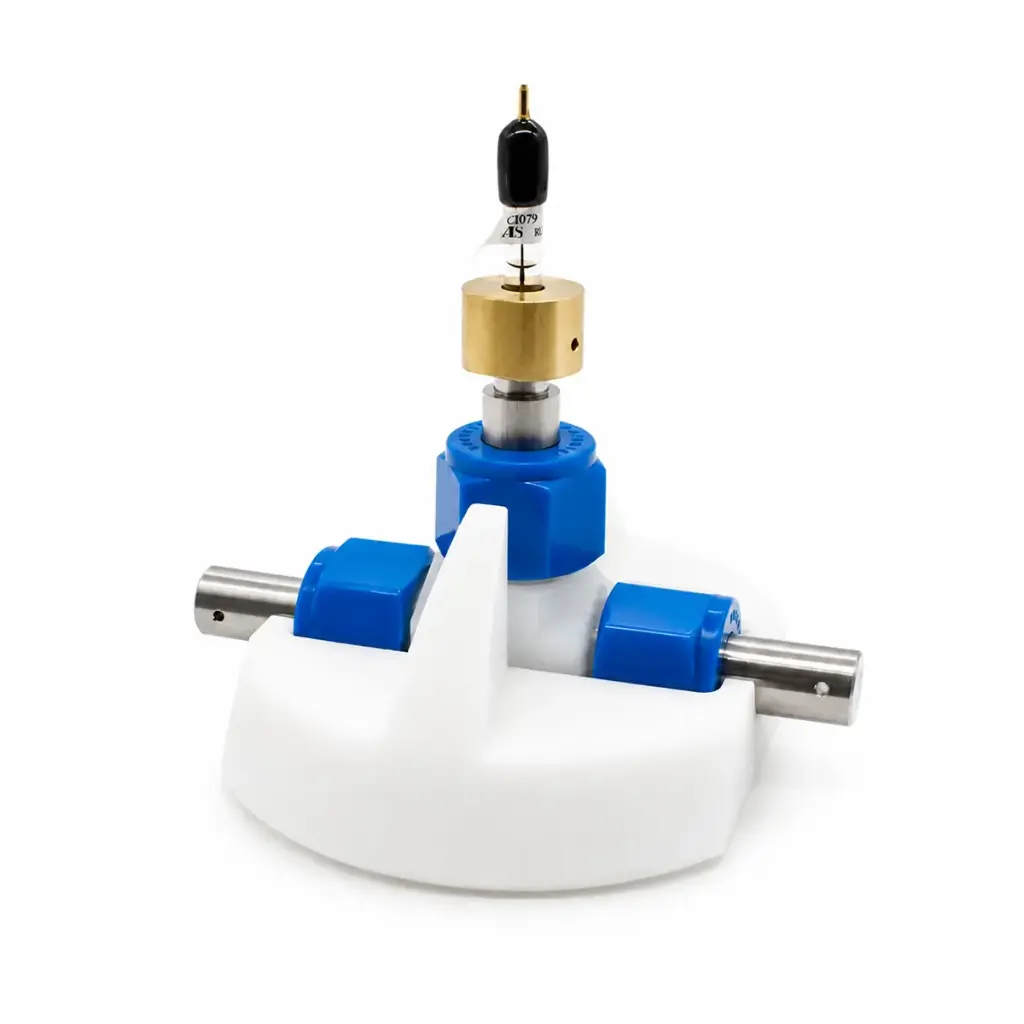
PFA Battery Test Cell – 3-Electrode with Reference Electrode, 1/2″
Reusable 1/2″ PFA three-electrode battery test cell for controlled electrochemical measurements with an independently connected removable reference electrode. The primary stack accommodates electrodes up to Ø12.7 mm and stack thicknesses up to 5 mm between two titanium plungers with direct Ø2.0 mm electrical connections. A dedicated adjustable holder accepts a compatible reference electrode with a nominal Ø6 mm insertion section, and the assembly is supplied with a stabilising support stand.
No account required. Add the products you need, then send your request to our technical sales team.
Request Pricing AccessAlready have an approved account? Sign in
Reusable 1/2″ PFA battery test cell with removable reference electrode
The S4R 1/2″ three-electrode battery test cell is a reusable laboratory platform for controlled electrochemical measurements with an independently connected reference electrode. The primary stack is assembled between two opposed titanium plungers inside a chemically resistant PFA body, while a dedicated vertical holder accepts a compatible reference electrode with a nominal Ø 6 mm insertion section.
The reference-electrode insertion depth is adjustable before sealing, allowing the junction position to be set for the experimental geometry. A dedicated support stand stabilises the complete assembly during connection, measurement and handling.
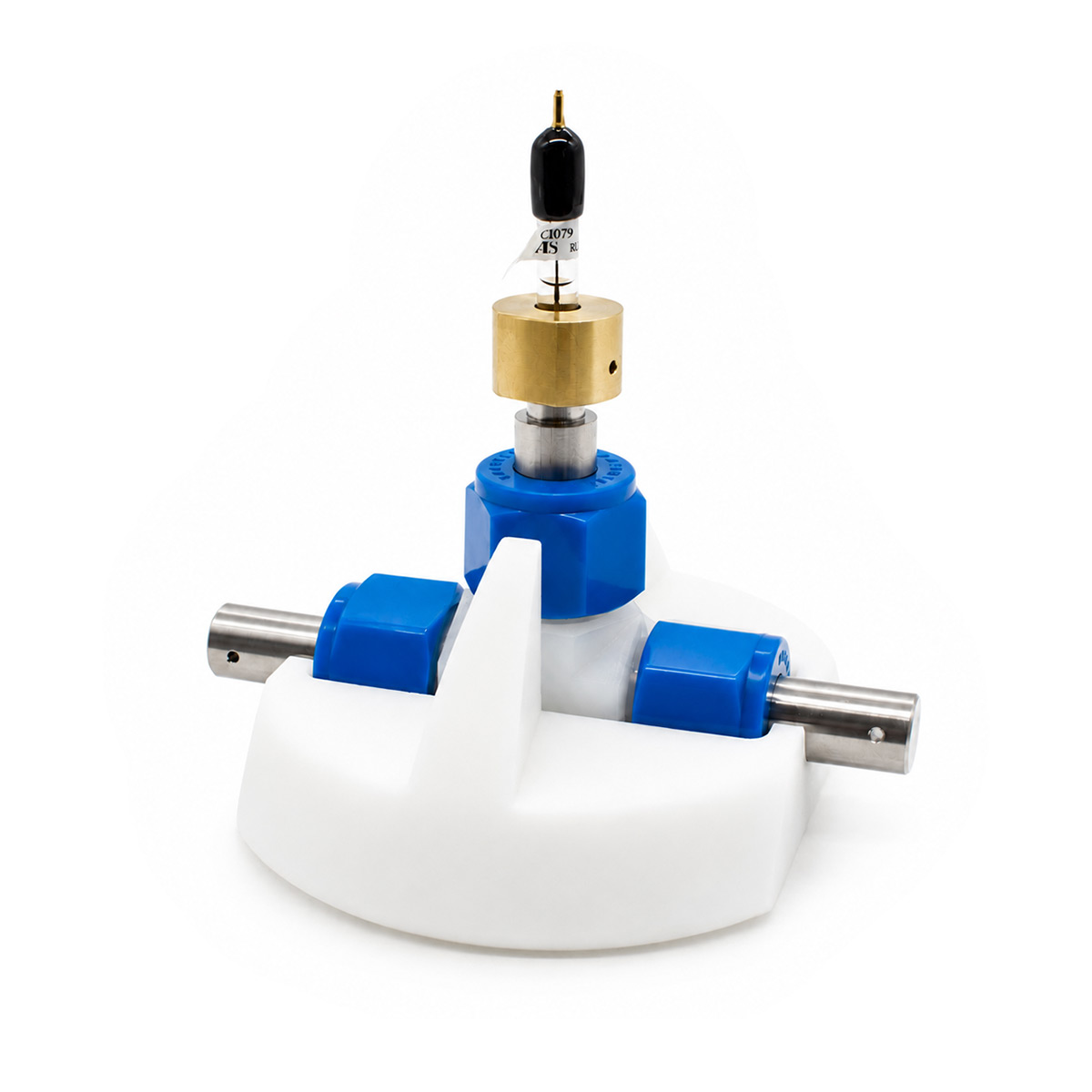
Designed for independently referenced electrochemical measurements
A reusable 1/2″ platform combining titanium primary interfaces, adjustable reference-electrode positioning and stable benchtop support.
Independent WE / CE / RE measurement
Supports the conventional three-electrode arrangement in which working-electrode potential is measured or controlled relative to an independent reference while current flows through the working–counter path.
Titanium primary plungers
Two opposed titanium plungers form the primary metallic interfaces. Titanium is the only plunger material supplied for this model.
Removable Ø 6 mm reference interface
The dedicated holder accepts a mechanically compatible reference electrode with a nominal Ø 6 mm insertion section, allowing the reference chemistry to be selected for the electrolyte system.
Adjustable reference positioning
Insertion depth is set before gland tightening so the reference junction can be positioned reproducibly for the selected measurement geometry.
Three-electrode control with an independent reference
In a conventional three-electrode cell, current passes between the working electrode and the counter (auxiliary) electrode. The reference electrode serves as the potential reference for the working electrode and should carry only negligible current under normal potentiostatic measurement conditions.
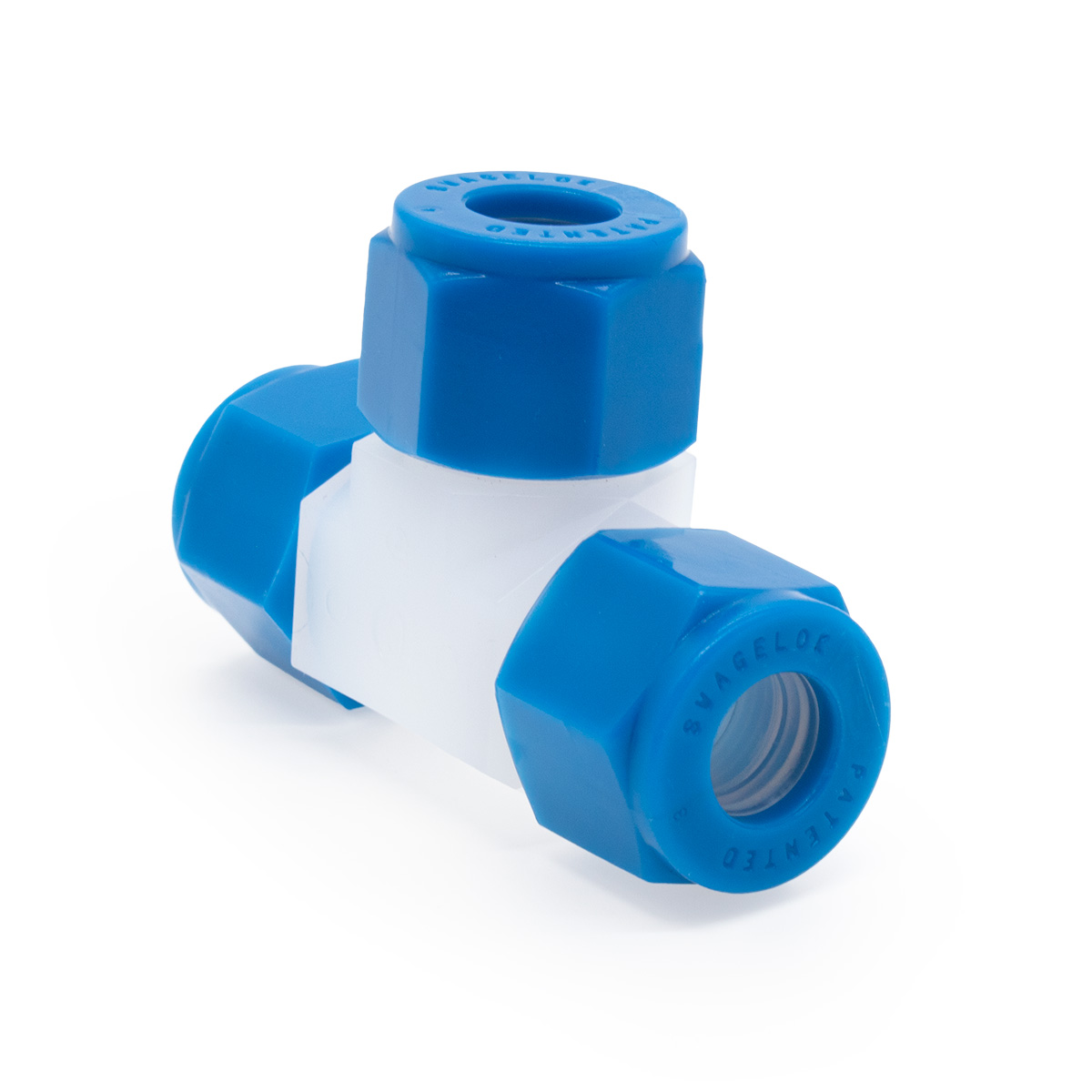
PFA body with titanium primary electrode interfaces
The assembly incorporates a PFA body component manufactured by Swagelok Company within an independently assembled S4R electrochemical test-cell architecture. PFA provides electrical insulation, low surface energy and broad chemical resistance for many aqueous and non-aqueous electrolyte systems used in laboratory electrochemistry.
The nominal 1/2″ format provides a useful internal diameter of 12.7 mm and is specified for primary electrodes up to Ø 12.7 mm. The stack is formed between two opposed titanium plungers, with a maximum stack thickness of 5 mm.
Titanium is the only primary-plunger material supplied for this model. Its compatibility with the electrolyte, potential window and temperature must nevertheless be assessed for the intended experiment rather than assumed to be universal.
For experiments requiring three independently accessible contacts without a dedicated removable reference-electrode holder, see the standard 1/2″ PFA three-electrode battery test cell.
Removable Ø 6 mm reference-electrode interface
The dedicated vertical holder is designed for a mechanically compatible reference electrode with a nominal Ø 6 mm insertion section. The reference chemistry is selected according to the electrolyte, solvent system and potential scale required by the protocol.
The insertion depth is adjusted before the holder is sealed. This allows the reference junction to be positioned at a controlled location relative to the working electrode while preserving the mechanical clearance required by the cell geometry.
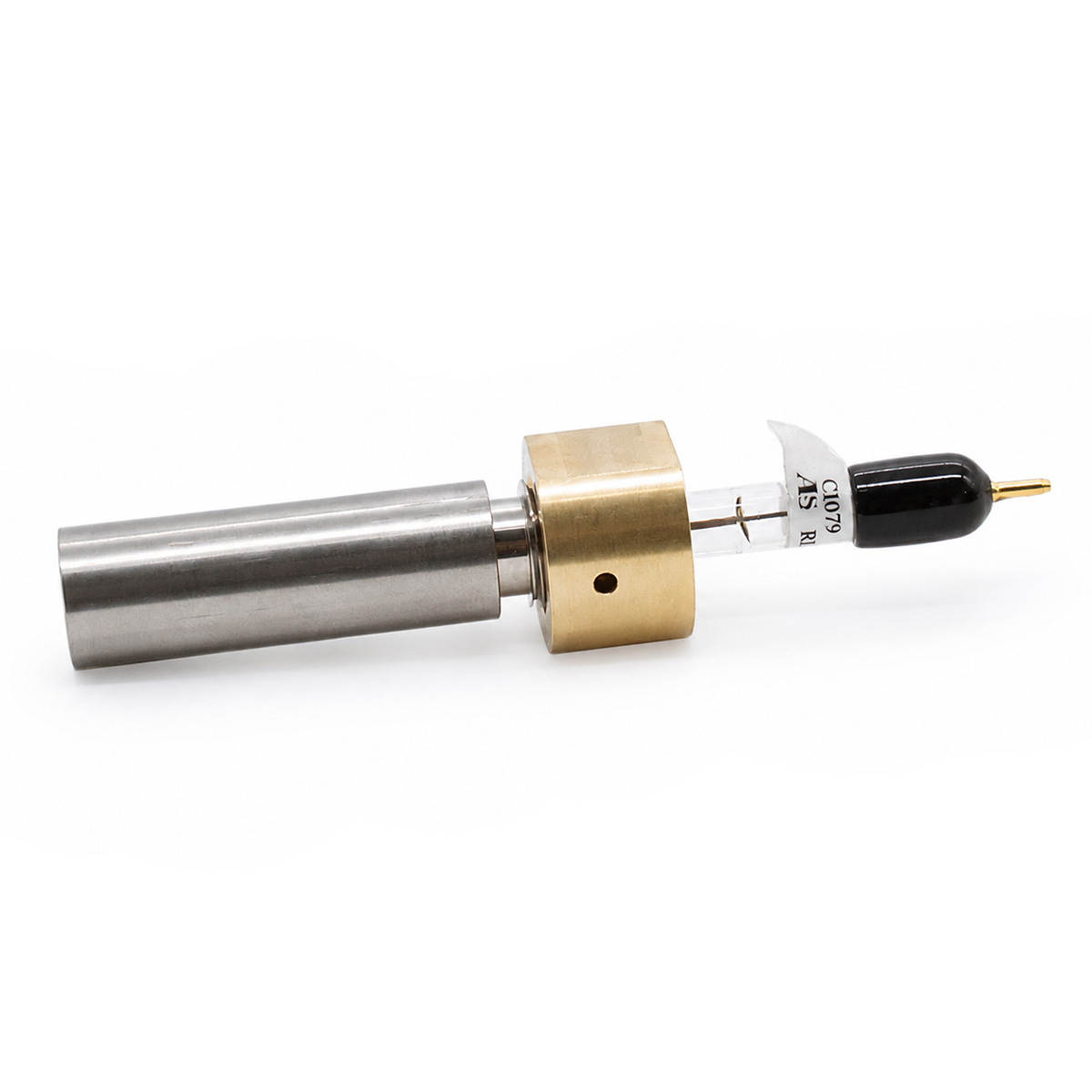
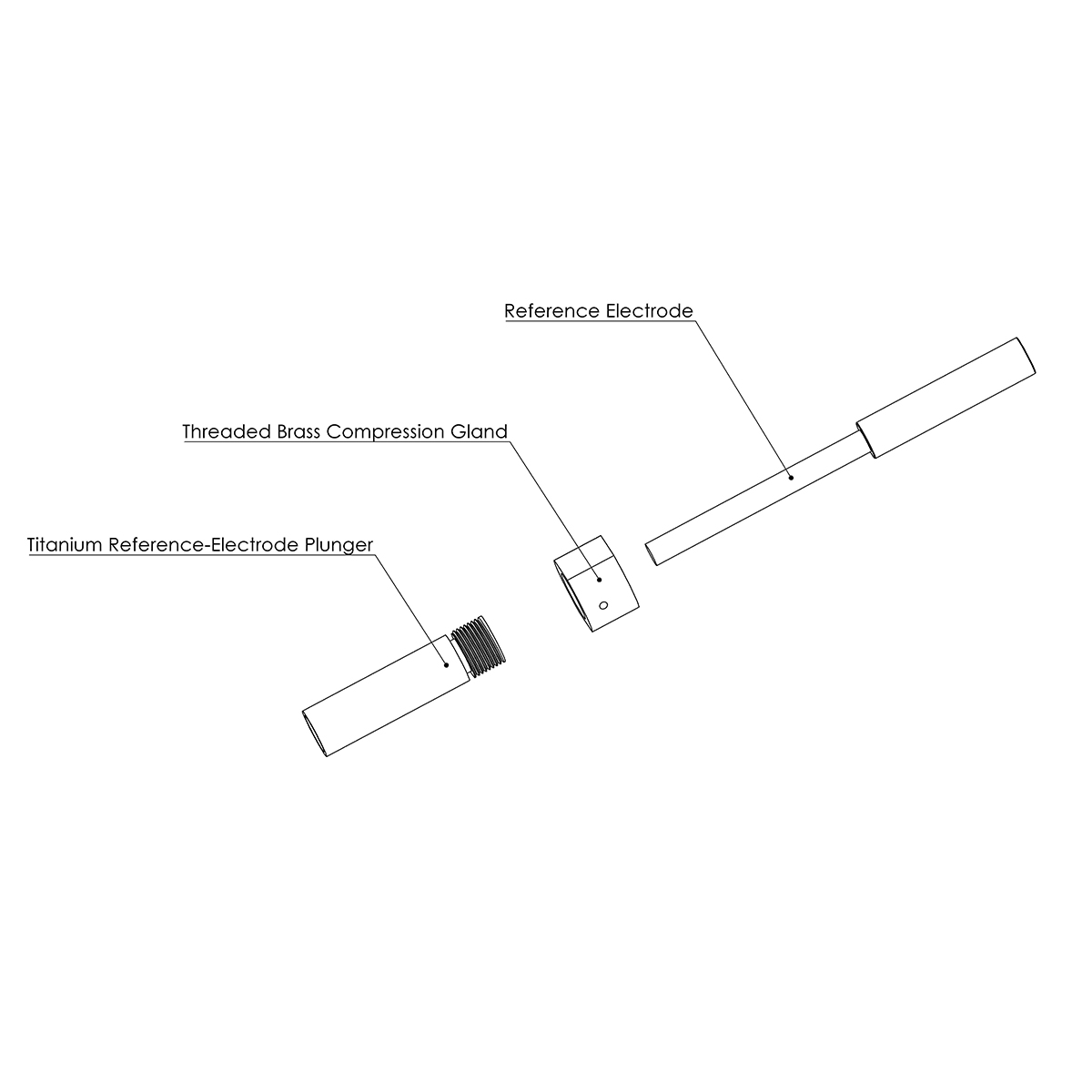
Adjustable O-ring compression gland
The reference electrode is retained by a dedicated threaded holder. Tightening the gland compresses an elastomer O-ring, producing radial contact with the electrode body and providing both sealing and mechanical retention within the holder.
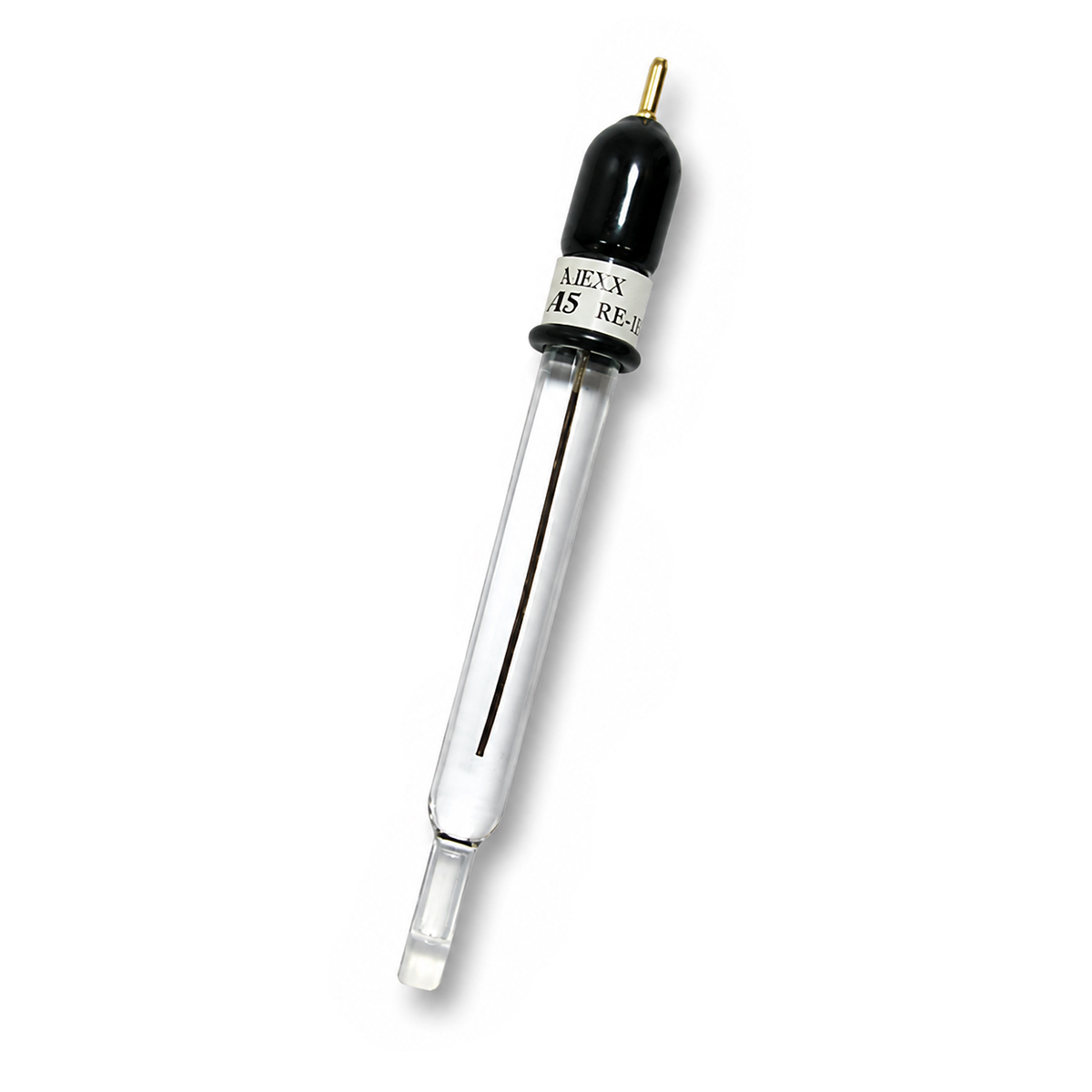
Select the reference chemistry for the electrolyte system
The Ø 6 mm holder defines mechanical compatibility only. Electrochemical suitability depends on the reference chemistry, filling solution, junction design, electrolyte and measurement protocol. Reference potentials from different systems are not interchangeable without appropriate conversion.
| Reference chemistry | Typical medium | Selection note |
|---|---|---|
| Ag/AgCl | Aqueous systems where chloride is compatible | Widely used in aqueous electrochemistry. Potential depends on filling-solution composition and concentration. |
| Hg/Hg₂SO₄ | Sulfate-based, chloride-free aqueous systems | Useful where a sulfate reference scale is required; contains mercury and is subject to handling and disposal restrictions. |
| SCE | Aqueous systems where chloride is acceptable | Established calomel reference system; contains mercury and requires appropriate institutional handling procedures. |
| Ag/Ag⁺ | Compatible non-aqueous electrolytes | Potential depends on solvent, Ag⁺ concentration and supporting electrolyte; protocol-specific calibration may be required. |
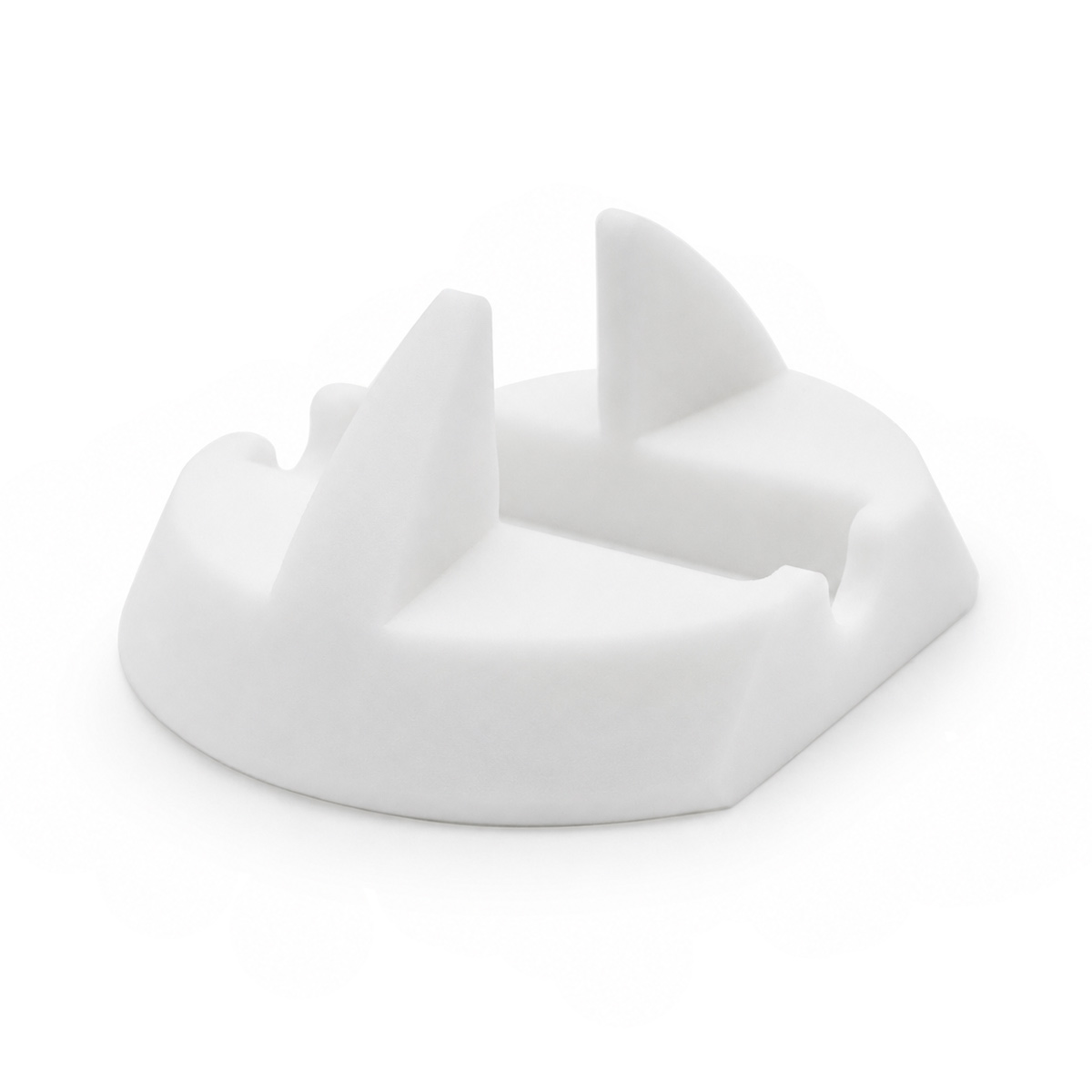
Stable benchtop positioning of the complete assembly
The dedicated stand supports the cell in an upright orientation during connection and measurement. This improves handling stability and reduces accidental mechanical loading or movement of the vertically mounted reference-electrode assembly.
For comparative experiments, the reference-electrode insertion depth should be recorded and reproduced between runs. The stand helps maintain a consistent global orientation, but reference position remains an operator-controlled parameter.
Improved handling stability
Keeps the assembled cell supported while laboratory leads and the reference electrode are connected.
Repeatable setup geometry
Provides a consistent assembly orientation while reference insertion depth is controlled separately.
Reference dimensions
The original S4R technical drawing is retained for the complete cell-and-stand assembly. Values are nominal/reference dimensions and are not manufacturing tolerances.
Technical specifications
Reference data for the 1/2″ PFA three-electrode assembly with removable reference electrode.
| Parameter | Specification |
|---|---|
| Cell configuration | Reusable three-electrode electrochemical cell with dedicated removable reference-electrode holder |
| Main cell format | 1/2″ |
| Useful internal diameter | 1/2″ (12.7 mm nominal) |
| Recommended max. primary electrode diameter | Ø 12.7 mm |
| Maximum stack thickness | 5 mm |
| Cell body material | PFA body component (Swagelok) with PFA compression hardware |
| Primary plunger material | Titanium only |
| Primary electrical connection | Transverse Ø 2.0 mm port on each titanium plunger for standard 2 mm laboratory connections |
| Reference electrode interface | Dedicated vertical holder for a compatible reference electrode with nominal Ø 6 mm insertion section |
| Reference insertion depth | Adjustable by the operator before gland tightening |
| Reference sealing | Elastomer O-ring compressed by a threaded gland; O-ring material selected for chemical compatibility |
| Reference electrical connection | Provided by the selected reference electrode; connector type depends on electrode model |
| Reference electrode supply | Not included unless explicitly selected in the ordered configuration |
| Maximum validated cell-hardware temperature | 100 °C; complete-system temperature is limited by the lowest-rated installed component, including the reference electrode and O-ring |
| Support stand | Dedicated stabilising stand included |
| Approximate assembly mass | ≈ 315 g, excluding the reference electrode |
| Overall assembled height | 86 mm |
| Overall assembled width | 117.5 mm |
| Base width | 85 mm |
| Support depth | 107 mm |
| Construction | Fully disassemblable for electrode installation, cleaning, inspection and component replacement |
| Typical applications | Battery-material studies, supercapacitors, corrosion research and other laboratory measurements requiring an independently referenced working-electrode potential |
Included components
Supplied as a complete mechanical test-cell assembly. Reference-electrode supply depends on the ordered configuration.
Selecting and operating the reference-electrode configuration
What is the maximum recommended primary electrode diameter?
The recommended maximum diameter is Ø 12.7 mm for the nominal 1/2″ primary cell format.
Which primary plunger material is supplied?
This model is supplied exclusively with titanium primary plungers. The primary-plunger material is fixed for this reference-electrode configuration.
What reference electrode fits the dedicated holder?
The holder is intended for a mechanically compatible reference electrode with a nominal Ø 6 mm insertion section. Reference chemistry and filling solution must be selected for the electrolyte and protocol.
Why is the reference-electrode position adjustable?
Adjustable depth allows the reference junction to be positioned consistently for the chosen cell geometry. Position affects the uncompensated solution resistance included in the working-electrode potential measurement and should therefore be controlled between comparable tests.
Before use
Operating limits
The S4R cell hardware is validated to 100 °C. The complete system must remain within the lower temperature limit of the installed reference electrode, O-ring and other selected components.
Material compatibility
Compatibility between the electrolyte, PFA components, titanium primary plungers, O-ring and reference-electrode materials should be assessed for solvent, salt, concentration, temperature and potential window.
Assembly and maintenance
Inspect the O-ring, gland, sealing surfaces and titanium contacts during routine maintenance. Reference electrodes should be stored, conditioned and maintained according to the instructions applicable to the selected chemistry.
Reusable 1/2″ PFA battery test cell with removable reference electrode
The S4R 1/2″ three-electrode battery test cell is a reusable laboratory platform for controlled electrochemical measurements with an independently connected reference electrode. The primary stack is assembled between two opposed titanium plungers inside a chemically resistant PFA body, while a dedicated vertical holder accepts a compatible reference electrode with a nominal Ø 6 mm insertion section.
The reference-electrode insertion depth is adjustable before sealing, allowing the junction position to be set for the experimental geometry. A dedicated support stand stabilises the complete assembly during connection, measurement and handling.
Designed for independently referenced electrochemical measurements
A reusable 1/2″ platform combining titanium primary interfaces, adjustable reference-electrode positioning and stable benchtop support.
Independent WE / CE / RE measurement
Supports the conventional three-electrode arrangement in which working-electrode potential is measured or controlled relative to an independent reference while current flows through the working–counter path.
Titanium primary plungers
Two opposed titanium plungers form the primary metallic interfaces. Titanium is the only plunger material supplied for this model.
Removable Ø 6 mm reference interface
The dedicated holder accepts a mechanically compatible reference electrode with a nominal Ø 6 mm insertion section, allowing the reference chemistry to be selected for the electrolyte system.
Adjustable reference positioning
Insertion depth is set before gland tightening so the reference junction can be positioned reproducibly for the selected measurement geometry.
Three-electrode control with an independent reference
In a conventional three-electrode cell, current passes between the working electrode and the counter (auxiliary) electrode. The reference electrode serves as the potential reference for the working electrode and should carry only negligible current under normal potentiostatic measurement conditions.
PFA body with titanium primary electrode interfaces
The assembly incorporates a PFA body component manufactured by Swagelok Company within an independently assembled S4R electrochemical test-cell architecture. PFA provides electrical insulation, low surface energy and broad chemical resistance for many aqueous and non-aqueous electrolyte systems used in laboratory electrochemistry.
The nominal 1/2″ format provides a useful internal diameter of 12.7 mm and is specified for primary electrodes up to Ø 12.7 mm. The stack is formed between two opposed titanium plungers, with a maximum stack thickness of 5 mm.
Titanium is the only primary-plunger material supplied for this model. Its compatibility with the electrolyte, potential window and temperature must nevertheless be assessed for the intended experiment rather than assumed to be universal.
For experiments requiring three independently accessible contacts without a dedicated removable reference-electrode holder, see the standard 1/2″ PFA three-electrode battery test cell.
Removable Ø 6 mm reference-electrode interface
The dedicated vertical holder is designed for a mechanically compatible reference electrode with a nominal Ø 6 mm insertion section. The reference chemistry is selected according to the electrolyte, solvent system and potential scale required by the protocol.
The insertion depth is adjusted before the holder is sealed. This allows the reference junction to be positioned at a controlled location relative to the working electrode while preserving the mechanical clearance required by the cell geometry.
Adjustable O-ring compression gland
The reference electrode is retained by a dedicated threaded holder. Tightening the gland compresses an elastomer O-ring, producing radial contact with the electrode body and providing both sealing and mechanical retention within the holder.
Select the reference chemistry for the electrolyte system
The Ø 6 mm holder defines mechanical compatibility only. Electrochemical suitability depends on the reference chemistry, filling solution, junction design, electrolyte and measurement protocol. Reference potentials from different systems are not interchangeable without appropriate conversion.
| Reference chemistry | Typical medium | Selection note |
|---|---|---|
| Ag/AgCl | Aqueous systems where chloride is compatible | Widely used in aqueous electrochemistry. Potential depends on filling-solution composition and concentration. |
| Hg/Hg₂SO₄ | Sulfate-based, chloride-free aqueous systems | Useful where a sulfate reference scale is required; contains mercury and is subject to handling and disposal restrictions. |
| SCE | Aqueous systems where chloride is acceptable | Established calomel reference system; contains mercury and requires appropriate institutional handling procedures. |
| Ag/Ag⁺ | Compatible non-aqueous electrolytes | Potential depends on solvent, Ag⁺ concentration and supporting electrolyte; protocol-specific calibration may be required. |
Stable benchtop positioning of the complete assembly
The dedicated stand supports the cell in an upright orientation during connection and measurement. This improves handling stability and reduces accidental mechanical loading or movement of the vertically mounted reference-electrode assembly.
For comparative experiments, the reference-electrode insertion depth should be recorded and reproduced between runs. The stand helps maintain a consistent global orientation, but reference position remains an operator-controlled parameter.
Improved handling stability
Keeps the assembled cell supported while laboratory leads and the reference electrode are connected.
Repeatable setup geometry
Provides a consistent assembly orientation while reference insertion depth is controlled separately.
Reference dimensions
The original S4R technical drawing is retained for the complete cell-and-stand assembly. Values are nominal/reference dimensions and are not manufacturing tolerances.
Technical specifications
Reference data for the 1/2″ PFA three-electrode assembly with removable reference electrode.
| Parameter | Specification |
|---|---|
| Cell configuration | Reusable three-electrode electrochemical cell with dedicated removable reference-electrode holder |
| Main cell format | 1/2″ |
| Useful internal diameter | 1/2″ (12.7 mm nominal) |
| Recommended max. primary electrode diameter | Ø 12.7 mm |
| Maximum stack thickness | 5 mm |
| Cell body material | PFA body component (Swagelok) with PFA compression hardware |
| Primary plunger material | Titanium only |
| Primary electrical connection | Transverse Ø 2.0 mm port on each titanium plunger for standard 2 mm laboratory connections |
| Reference electrode interface | Dedicated vertical holder for a compatible reference electrode with nominal Ø 6 mm insertion section |
| Reference insertion depth | Adjustable by the operator before gland tightening |
| Reference sealing | Elastomer O-ring compressed by a threaded gland; O-ring material selected for chemical compatibility |
| Reference electrical connection | Provided by the selected reference electrode; connector type depends on electrode model |
| Reference electrode supply | Not included unless explicitly selected in the ordered configuration |
| Maximum validated cell-hardware temperature | 100 °C; complete-system temperature is limited by the lowest-rated installed component, including the reference electrode and O-ring |
| Support stand | Dedicated stabilising stand included |
| Approximate assembly mass | ≈ 315 g, excluding the reference electrode |
| Overall assembled height | 86 mm |
| Overall assembled width | 117.5 mm |
| Base width | 85 mm |
| Support depth | 107 mm |
| Construction | Fully disassemblable for electrode installation, cleaning, inspection and component replacement |
| Typical applications | Battery-material studies, supercapacitors, corrosion research and other laboratory measurements requiring an independently referenced working-electrode potential |
Included components
Supplied as a complete mechanical test-cell assembly. Reference-electrode supply depends on the ordered configuration.
Selecting and operating the reference-electrode configuration
What is the maximum recommended primary electrode diameter?
The recommended maximum diameter is Ø 12.7 mm for the nominal 1/2″ primary cell format.
Which primary plunger material is supplied?
This model is supplied exclusively with titanium primary plungers. The primary-plunger material is fixed for this reference-electrode configuration.
What reference electrode fits the dedicated holder?
The holder is intended for a mechanically compatible reference electrode with a nominal Ø 6 mm insertion section. Reference chemistry and filling solution must be selected for the electrolyte and protocol.
Why is the reference-electrode position adjustable?
Adjustable depth allows the reference junction to be positioned consistently for the chosen cell geometry. Position affects the uncompensated solution resistance included in the working-electrode potential measurement and should therefore be controlled between comparable tests.
Before use
Operating limits
The S4R cell hardware is validated to 100 °C. The complete system must remain within the lower temperature limit of the installed reference electrode, O-ring and other selected components.
Material compatibility
Compatibility between the electrolyte, PFA components, titanium primary plungers, O-ring and reference-electrode materials should be assessed for solvent, salt, concentration, temperature and potential window.
Assembly and maintenance
Inspect the O-ring, gland, sealing surfaces and titanium contacts during routine maintenance. Reference electrodes should be stored, conditioned and maintained according to the instructions applicable to the selected chemistry.
Our latest content
Check out what's new in our company !