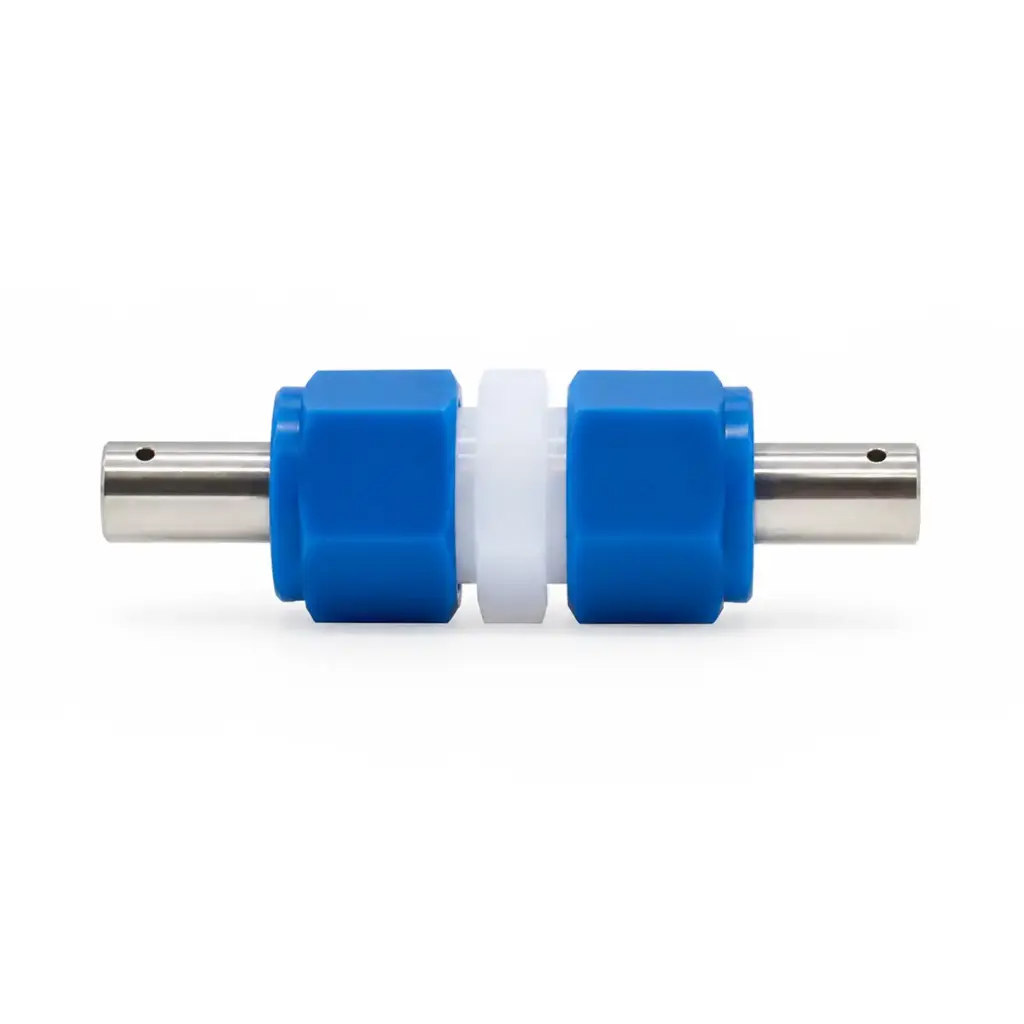
PFA Battery Test Cell – 2-Electrode, 1/2″
No account required. Add the products you need, then send your request to our technical sales team.
Request Pricing AccessAlready have an approved account? Sign in
Reusable 1/2″ PFA battery test cell for two-electrode measurements
The S4R 1/2″ two-electrode battery test cell is a reusable laboratory platform for controlled electrochemical evaluation of battery and electrode materials. Its larger internal format accommodates electrodes up to Ø 12.7 mm while retaining direct electrical access, interchangeable metallic plungers and spring-assisted stack compression.
Compared with the 1/4″ format, the 1/2″ architecture provides a larger active area and greater internal working volume while preserving full access to the stack for assembly, electrode recovery, cleaning and post-test inspection.
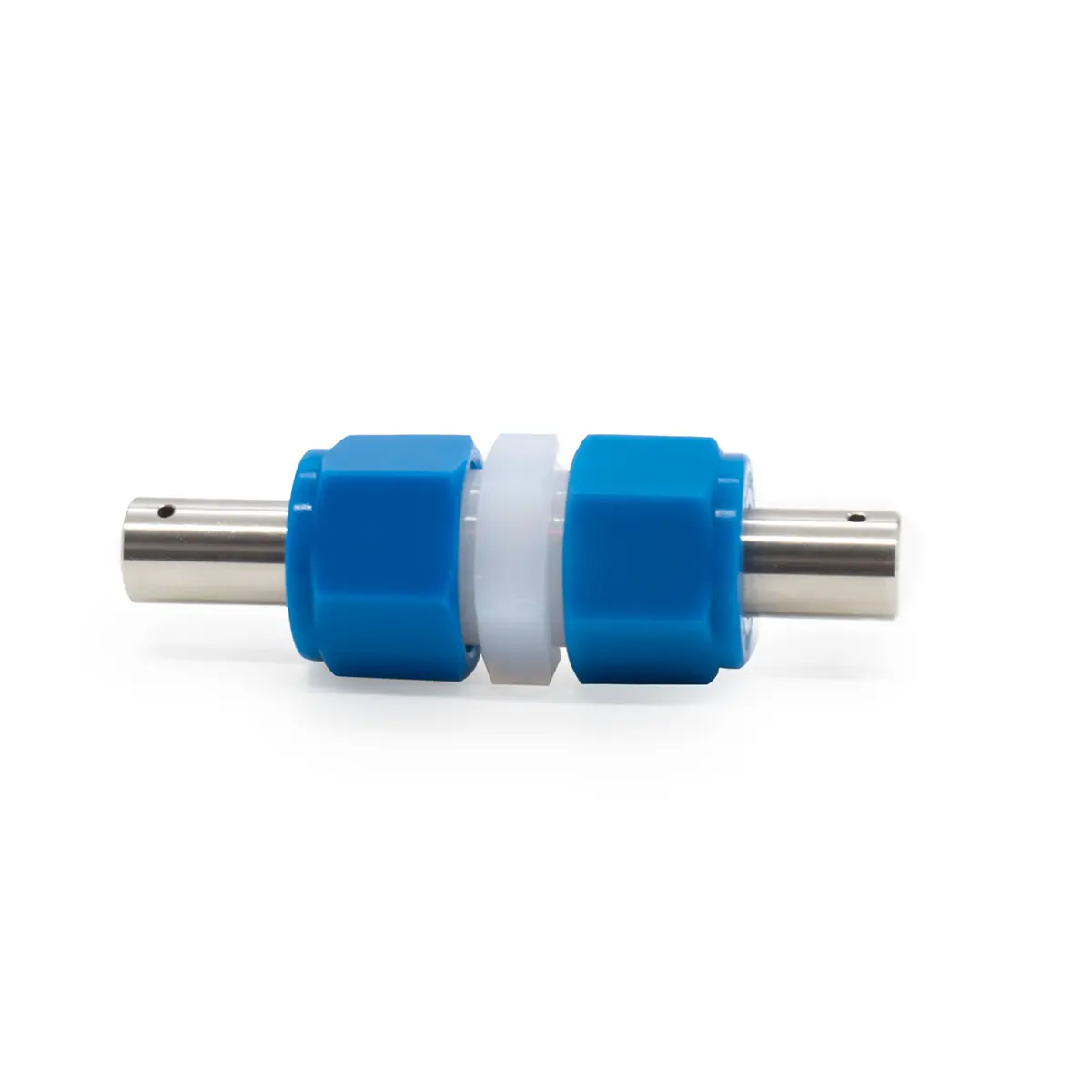
Designed for larger-format electrochemical experiments
A reusable two-terminal platform combining a 1/2″ working format, controlled stack contact and direct access to the electrode assembly.
Larger 1/2″ working format
Supports electrodes up to Ø 12.7 mm where a larger active area or greater sample volume is preferred over the compact 1/4″ configuration.
Reproducible stack compression
An internal spring maintains contact across the stack as the assembly relaxes or changes dimension during cycling.
Three plunger materials
SS316, aluminium or titanium current collectors can be selected according to the chemistry and potential window of the experiment.
Reusable and serviceable
The cell can be fully opened for electrode recovery, cleaning, inspection and reconfiguration between experimental series.
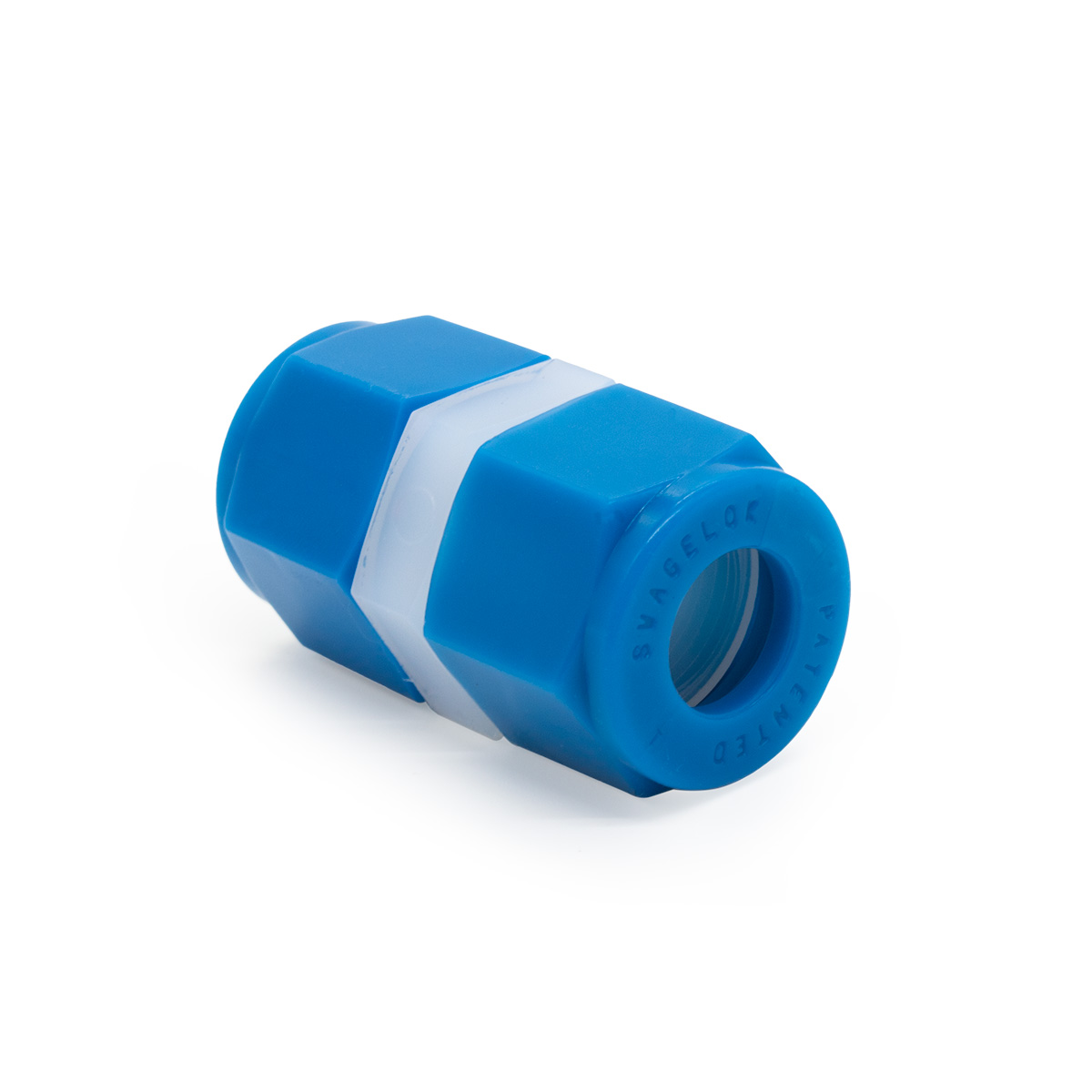
PFA body for chemically demanding electrochemical systems
The cell incorporates a PFA body component manufactured by Swagelok Company within an independently assembled S4R battery-test architecture. PFA is a fully fluorinated polymer valued for broad chemical resistance, low surface energy and electrical insulation, making it suitable for many aqueous and non-aqueous electrolyte systems used in laboratory electrochemistry.
The nominal 1/2″ internal format provides a useful diameter of 12.7 mm and is specified for electrodes up to Ø 12.7 mm. The body can be fully disassembled, giving direct access to the stack for sample installation, electrode recovery, cleaning and inspection between experiments.
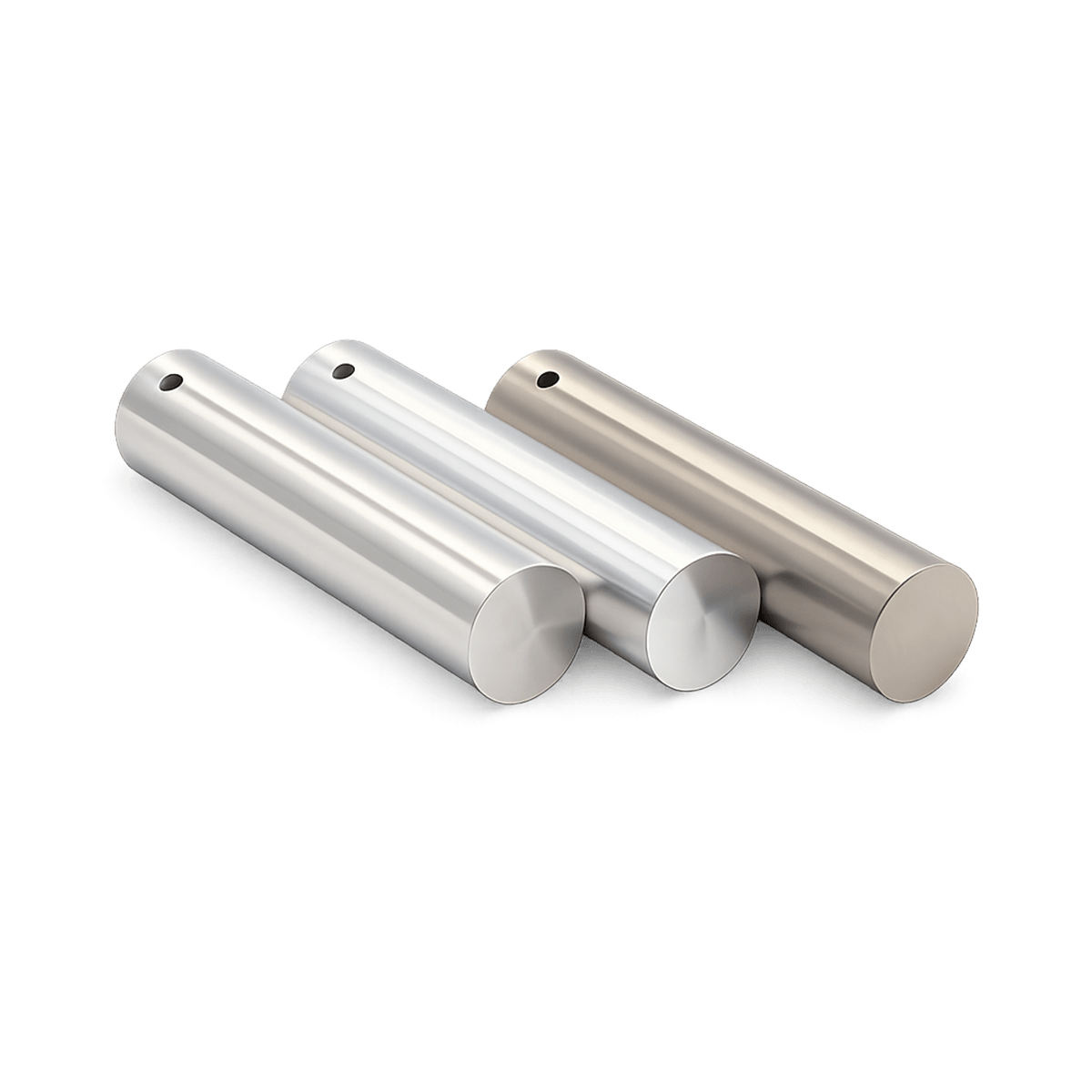
Interchangeable metallic plungers
The plungers provide electrical contact to the electrode stack while also transmitting the mechanical load generated by the internal compression assembly. Their material therefore acts as both current collector and structural component, and is selected according to the chemistry and potential window of the experiment.
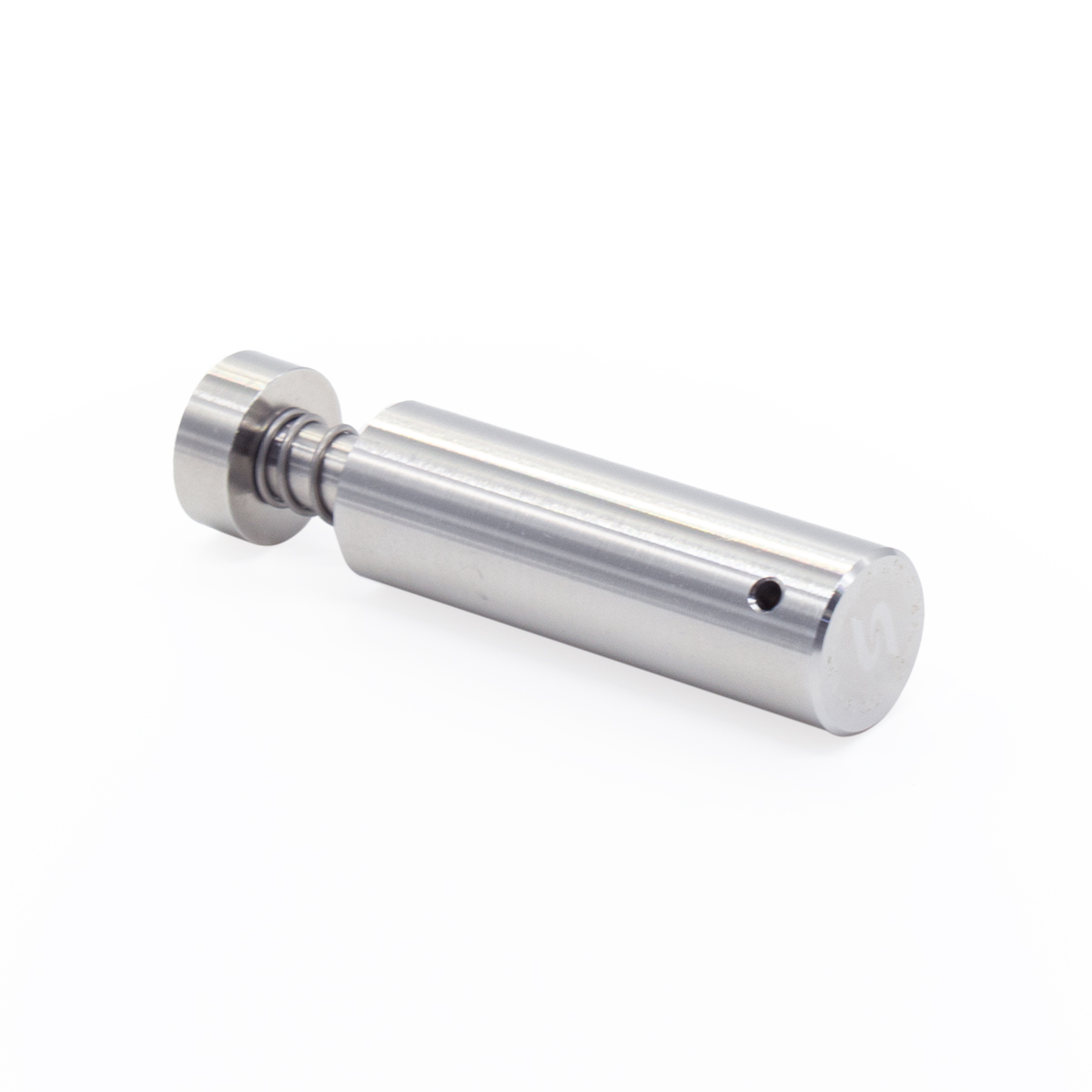
Spring-loaded compression and stack adjustment
The internal spring applies a preload to the stack and helps maintain mechanical and electrical contact between the electrodes, the separator or electrolyte layer and the metallic interfaces as the assembly relaxes or changes dimension during cycling. Maintaining reproducible contact removes one source of variation in measured cell resistance.
Removable spacers set the working length of the assembly, allowing the cell to accommodate stack thicknesses up to 5 mm within the geometric limits of the 1/2″ configuration.
PFA compression-ferrule sealing
Each side uses a PFA compression nut and ferrule assembly corresponding to the body component. Tightening the nut compresses the ferrule around the plunger, providing the mechanical seal while retaining the plunger at the position established during assembly.
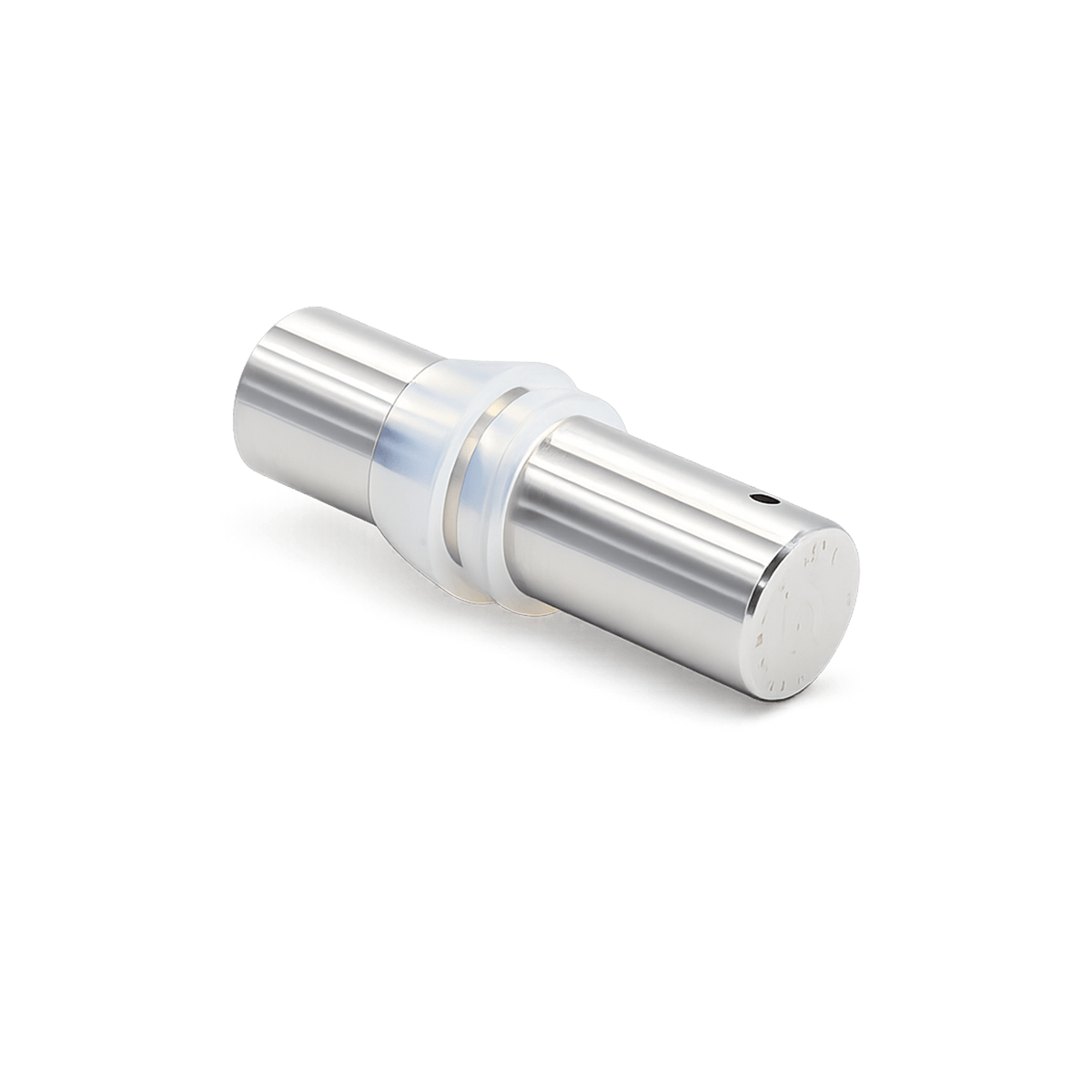
Electrical connection and two-electrode geometry
Each metallic plunger contains a transverse Ø 2.0 mm connection port for standard 2 mm banana plugs, allowing direct connection to a potentiostat, battery cycler or impedance analyser using conventional laboratory leads. The two connections are located on opposite plungers and remain outside the sealed cell volume, so each terminal is accessed independently without an internal electrical feedthrough.
In this two-electrode geometry, the working and counter electrodes form the complete electrochemical cell. The measured cell voltage corresponds to the potential difference between the two plungers and therefore includes the polarisation of both electrodes together with the ohmic and interfacial contributions of the complete assembly.
This configuration suits full-cell, half-cell, symmetric-cell and related two-terminal measurements where the overall cell response is the quantity of interest. Where the potential of a single electrode must be resolved independently, a three-electrode cell with a separate reference electrode is required.
Built for comparative experimental series
Plunger material, stack thickness and compression arrangement can be changed while retaining the same 1/2″ body and nominal geometry. The larger working diameter is suited to comparative experimental series where electrode area or sample quantity must remain consistent from test to test.
Because the assembly is serviceable, a damaged sealing component or a contaminated contact surface can be addressed independently without replacing the complete cell. This supports repeated experimental series while keeping the main cell hardware in service.
For related test architectures, the 1/4″ PFA two-electrode battery test cell provides a more compact format, the 1/2″ PFA three-electrode battery test cell adds a third independently accessible contact, and the 1/2″ SS316 two-electrode battery test cell provides a stainless-steel body alternative.
Reference dimensions
The original S4R technical drawing is retained to preserve the detailed geometry of the assembled cell. The reference values below summarize the dimensions most relevant to installation and electrode selection.
Technical specifications
Reference data for the 1/2″ two-electrode PFA battery test cell.
| Parameter | Specification |
|---|---|
| Cell type | Reusable PFA battery test cell, two-electrode configuration |
| Nominal format | 1/2″ |
| Useful internal diameter | 1/2″ (12.7 mm) |
| Recommended max. electrode diameter | Ø 12.7 mm |
| Maximum stack thickness | 5 mm |
| Maximum validated temperature | 100 °C |
| Body material | PFA body component (Swagelok) with PFA compression hardware |
| Sealing system | PFA compression nuts and ferrules |
| Plunger materials | SS316, aluminium or titanium, according to the selected configuration |
| Compression system | Internal spring with removable adjustment spacers |
| Electrical connection | Transverse Ø 2.0 mm port on each plunger, for standard 2 mm banana plugs |
| Reference electrode | Not provided; two-electrode configuration only |
| Overall dimensions | 90 mm overall length; 29 mm maximum outer dimension |
| Construction | Fully disassemblable for sample loading, cleaning and component replacement |
| Typical applications | Battery-material screening, full-cell and half-cell studies, symmetric-cell testing, cycling and impedance measurements |
Included components
Supplied as a complete assembly, according to the selected plunger configuration.
Selecting and operating the 1/2″ configuration
What is the maximum recommended electrode diameter?
The recommended maximum electrode diameter is Ø 12.7 mm, corresponding to the nominal 1/2″ useful internal format of this configuration.
When should the 1/2″ format be selected instead of 1/4″?
The 1/2″ cell is intended for experiments requiring a larger electrode area or more internal working volume while retaining the same reusable two-electrode architecture and direct plunger connection.
Which plunger material should be selected?
SS316 is the standard general-purpose configuration. Aluminium and titanium are available where the chemistry or potential window requires a different current- collector material. Compatibility should be assessed for the specific test system.
Is the stack pressure defined or adjustable?
The internal spring applies a preload and removable spacers set the working length of the assembly. The cell is not a calibrated pressure fixture and does not provide a direct measurement or numerical setting of stack pressure.
Before use
Reusable 1/2″ PFA battery test cell for two-electrode measurements
The S4R 1/2″ two-electrode battery test cell is a reusable laboratory platform for controlled electrochemical evaluation of battery and electrode materials. Its larger internal format accommodates electrodes up to Ø 12.7 mm while retaining direct electrical access, interchangeable metallic plungers and spring-assisted stack compression.
Compared with the 1/4″ format, the 1/2″ architecture provides a larger active area and greater internal working volume while preserving full access to the stack for assembly, electrode recovery, cleaning and post-test inspection.
Designed for larger-format electrochemical experiments
A reusable two-terminal platform combining a 1/2″ working format, controlled stack contact and direct access to the electrode assembly.
Larger 1/2″ working format
Supports electrodes up to Ø 12.7 mm where a larger active area or greater sample volume is preferred over the compact 1/4″ configuration.
Reproducible stack compression
An internal spring maintains contact across the stack as the assembly relaxes or changes dimension during cycling.
Three plunger materials
SS316, aluminium or titanium current collectors can be selected according to the chemistry and potential window of the experiment.
Reusable and serviceable
The cell can be fully opened for electrode recovery, cleaning, inspection and reconfiguration between experimental series.
PFA body for chemically demanding electrochemical systems
The cell incorporates a PFA body component manufactured by Swagelok Company within an independently assembled S4R battery-test architecture. PFA is a fully fluorinated polymer valued for broad chemical resistance, low surface energy and electrical insulation, making it suitable for many aqueous and non-aqueous electrolyte systems used in laboratory electrochemistry.
The nominal 1/2″ internal format provides a useful diameter of 12.7 mm and is specified for electrodes up to Ø 12.7 mm. The body can be fully disassembled, giving direct access to the stack for sample installation, electrode recovery, cleaning and inspection between experiments.
Interchangeable metallic plungers
The plungers provide electrical contact to the electrode stack while also transmitting the mechanical load generated by the internal compression assembly. Their material therefore acts as both current collector and structural component, and is selected according to the chemistry and potential window of the experiment.
Spring-loaded compression and stack adjustment
The internal spring applies a preload to the stack and helps maintain mechanical and electrical contact between the electrodes, the separator or electrolyte layer and the metallic interfaces as the assembly relaxes or changes dimension during cycling. Maintaining reproducible contact removes one source of variation in measured cell resistance.
Removable spacers set the working length of the assembly, allowing the cell to accommodate stack thicknesses up to 5 mm within the geometric limits of the 1/2″ configuration.
PFA compression-ferrule sealing
Each side uses a PFA compression nut and ferrule assembly corresponding to the body component. Tightening the nut compresses the ferrule around the plunger, providing the mechanical seal while retaining the plunger at the position established during assembly.
Electrical connection and two-electrode geometry
Each metallic plunger contains a transverse Ø 2.0 mm connection port for standard 2 mm banana plugs, allowing direct connection to a potentiostat, battery cycler or impedance analyser using conventional laboratory leads. The two connections are located on opposite plungers and remain outside the sealed cell volume, so each terminal is accessed independently without an internal electrical feedthrough.
In this two-electrode geometry, the working and counter electrodes form the complete electrochemical cell. The measured cell voltage corresponds to the potential difference between the two plungers and therefore includes the polarisation of both electrodes together with the ohmic and interfacial contributions of the complete assembly.
This configuration suits full-cell, half-cell, symmetric-cell and related two-terminal measurements where the overall cell response is the quantity of interest. Where the potential of a single electrode must be resolved independently, a three-electrode cell with a separate reference electrode is required.
Built for comparative experimental series
Plunger material, stack thickness and compression arrangement can be changed while retaining the same 1/2″ body and nominal geometry. The larger working diameter is suited to comparative experimental series where electrode area or sample quantity must remain consistent from test to test.
Because the assembly is serviceable, a damaged sealing component or a contaminated contact surface can be addressed independently without replacing the complete cell. This supports repeated experimental series while keeping the main cell hardware in service.
For related test architectures, the 1/4″ PFA two-electrode battery test cell provides a more compact format, the 1/2″ PFA three-electrode battery test cell adds a third independently accessible contact, and the 1/2″ SS316 two-electrode battery test cell provides a stainless-steel body alternative.
Reference dimensions
The original S4R technical drawing is retained to preserve the detailed geometry of the assembled cell. The reference values below summarize the dimensions most relevant to installation and electrode selection.
Technical specifications
Reference data for the 1/2″ two-electrode PFA battery test cell.
| Parameter | Specification |
|---|---|
| Cell type | Reusable PFA battery test cell, two-electrode configuration |
| Nominal format | 1/2″ |
| Useful internal diameter | 1/2″ (12.7 mm) |
| Recommended max. electrode diameter | Ø 12.7 mm |
| Maximum stack thickness | 5 mm |
| Maximum validated temperature | 100 °C |
| Body material | PFA body component (Swagelok) with PFA compression hardware |
| Sealing system | PFA compression nuts and ferrules |
| Plunger materials | SS316, aluminium or titanium, according to the selected configuration |
| Compression system | Internal spring with removable adjustment spacers |
| Electrical connection | Transverse Ø 2.0 mm port on each plunger, for standard 2 mm banana plugs |
| Reference electrode | Not provided; two-electrode configuration only |
| Overall dimensions | 90 mm overall length; 29 mm maximum outer dimension |
| Construction | Fully disassemblable for sample loading, cleaning and component replacement |
| Typical applications | Battery-material screening, full-cell and half-cell studies, symmetric-cell testing, cycling and impedance measurements |
Included components
Supplied as a complete assembly, according to the selected plunger configuration.
Selecting and operating the 1/2″ configuration
What is the maximum recommended electrode diameter?
The recommended maximum electrode diameter is Ø 12.7 mm, corresponding to the nominal 1/2″ useful internal format of this configuration.
When should the 1/2″ format be selected instead of 1/4″?
The 1/2″ cell is intended for experiments requiring a larger electrode area or more internal working volume while retaining the same reusable two-electrode architecture and direct plunger connection.
Which plunger material should be selected?
SS316 is the standard general-purpose configuration. Aluminium and titanium are available where the chemistry or potential window requires a different current- collector material. Compatibility should be assessed for the specific test system.
Is the stack pressure defined or adjustable?
The internal spring applies a preload and removable spacers set the working length of the assembly. The cell is not a calibrated pressure fixture and does not provide a direct measurement or numerical setting of stack pressure.
Before use
Our latest content
Check out what's new in our company !