Skip to Content

Glass Drawdown Plate - Laboratory Coating Platform

https://www.s4r.fr/web/image/product.template/327/image_1920?unique=67b6984

The S4R Glass Drawdown Plate provides a stable, smooth working surface for manual wet-film preparation using coating rods and film applicators.

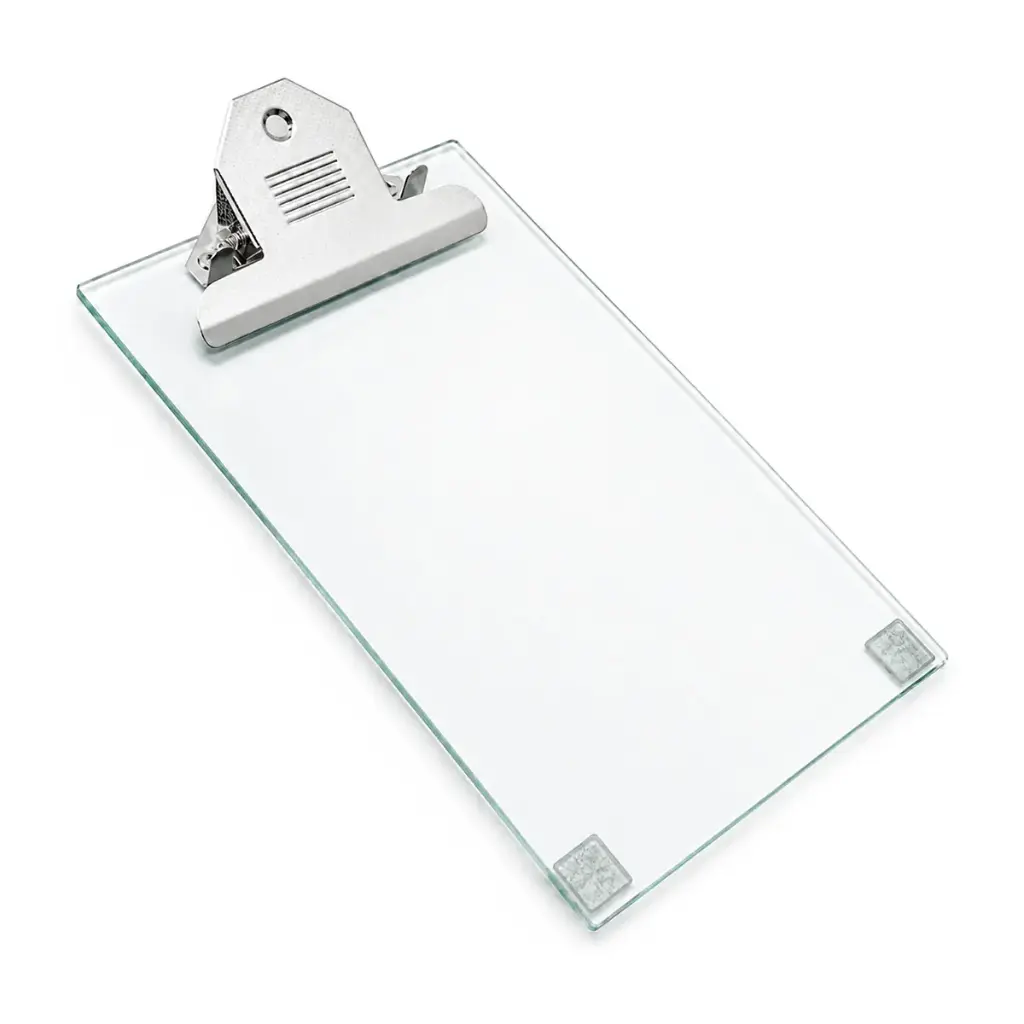
The platform combines an 8 mm nominal glass plate with a metal retaining clip that secures the substrate during drawdown. Four anti-slip rubber feet support the plate and help minimise movement on the laboratory bench, while the finished glass edges provide safe and convenient handling.

Three plate sizes are available — 160 × 280 mm, 230 × 340 mm and 300 × 480 mm — covering compact formulation work through larger electrode, membrane and functional-film preparation.

The transparent glass surface is easy to inspect and clean and is compatible with Formed Mayer Rods, fixed-gap applicators and micrometer-adjustable film applicators.

For very thin, flexible or strongly curled substrates requiring restraint across the complete coating area, a vacuum coating plate may provide more effective substrate holding than an edge clamp.

0.00 € 0.0 EUR 0.00 €

Pricing available to approved customers

Sign in to view your pricing, or request access to an S4R professional account.

  • Plate Size

This combination does not exist.

Request Pricing Access
Manual Wet-Film Preparation

Glass Drawdown Plate

Laboratory coating platform with an 8 mm glass surface, mechanical substrate retention and anti-slip bench support

Stable working platform for manual wet-film preparation with coating rods and film applicators. Glass is the reference surface for this work: it stays chemically inert against solvents and slurries, it neither corrodes nor releases anything into the coating, and its transparency allows the film to be inspected from underneath. A metal retaining clip secures the substrate and four anti-slip feet hold the plate steady throughout the drawdown.

Glass thickness
8 mm nominal
Available sizes
3 configurations
Substrate retention
Metal clip
Bench support
4 anti-slip feet
Product Highlights

A stable, inert surface for controlled manual drawdown

A clean and rigid working surface for laboratory coating, without the cost and the compressed-air supply of a vacuum platform.

01

Rigid 8 mm glass

Thick glass gives a rigid working surface that does not flex under the weight of a stainless-steel applicator or a loaded coating rod.

02

Chemically inert

Glass tolerates NMP, organic solvents and alkaline aqueous inks without corroding or contaminating the coating, unlike an aluminium plate.

03

Inspection from underneath

Transparency allows the wet film to be examined through the plate, so bubbles, voids and trapped particles show up immediately rather than after drying.

04

Retention and stability

A metal spring clip secures one end of the foil, film or paper substrate while four rubber feet keep the plate from moving on the bench.

Available Configurations

Three laboratory plate sizes

Three formats covering compact formulation work through larger electrode, membrane and functional-film preparation. The plate width determines which applicators can be used, so select it from the tool rather than from the substrate alone.

Compact
160 × 280 mm
Approx. 0.9 kg

For small substrates, formulation screening and routine benchtop coating with applicators up to 150 mm wide.

Standard
230 × 340 mm
Approx. 1.6 kg

The balanced laboratory format, suited to applicators up to 200 mm and to the 210 mm coating zone of the S4R formed rod.

Large
300 × 480 mm
Approx. 2.9 kg

Extended surface for larger substrates, electrode sheets and studies needing more drawdown length, with applicators up to 300 mm.

Reading the masses The figures above are the approximate mass of the glass alone, derived from the nominal dimensions. They exclude the retaining clip and the feet, and are given to help plan handling and storage rather than as a shipping weight.
Tool Compatibility

Matching the plate to the applicator

The working width of the applicator has to fit within the width of the plate, with clearance at each side for the formulation bead and for handling.

Plate size Applicator width Compatible S4R tools
160 × 280 mm Up to 150 mm Fixed-gap and micrometer applicators in 50, 80, 100 and 150 mm
230 × 340 mm Up to 210 mm The above, plus 180 and 200 mm applicators and the formed Mayer rod
300 × 480 mm Up to 300 mm The above, plus 250 and 300 mm micrometer applicators
Beyond 300 mm The 500 mm micrometer applicator exceeds the width of every plate in this range and needs a larger coating surface. Contact S4R if your workflow calls for that width, so a suitable support can be reviewed.
Product Data

Technical specifications

Parameter Specification
Product type Laboratory glass drawdown plate
Plate material Glass
Nominal glass thickness 8 mm
Available plate sizes 160 × 280, 230 × 340 and 300 × 480 mm
Approximate glass mass 0.9, 1.6 and 2.9 kg respectively
Substrate retention Metal retaining clip
Bench support 4 anti-slip rubber feet
Edge finish Smooth finished edges
Operation Manual wet-film drawdown
Compatible applicators Coating rods and fixed- or adjustable-gap film applicators, within the plate width
Typical Applications

Laboratory coating support

  • Battery electrode slurry coating
  • Separator and membrane coatings
  • Functional thin-film preparation
  • Polymer and ceramic coatings
  • Paint, ink and formulation drawdowns
Compatible S4R Tools

Manual coating applicators

  • Formed Mayer rod
  • Four-sided fixed-gap film applicator
  • Micrometer adjustable film applicator
Operating Guidance

Prepare a clean and stable coating surface

The condition of the substrate and of its support contributes as much to a repeatable drawdown as the applicator itself.

01

Clean the surface

Remove dust, dried formulation and particles from the glass before placing the substrate. A single particle under a foil lifts it locally and changes the effective clearance.

02

Secure the substrate

Position the sheet on the glass and use the retaining clip to hold it against movement during the coating stroke.

03

Draw down and inspect

Apply the formulation and move the rod or applicator across the substrate at a steady speed, then check the wet film through the plate before drying.

Package Contents

Included components

Supplied assembled and ready for use in the selected size.

Platform

Glass plate with feet

One 8 mm glass plate in the selected size, with its four anti-slip rubber feet fitted.

Retention

Metal retaining clip

Spring clip for securing one end of the substrate during the coating stroke.

Not included The coating rod or film applicator, the substrate, the formulation and solvents, the cleaning materials and the drying equipment used downstream.
Handling a glass plate Inspect the plate before each use and withdraw it from service if an edge is chipped or a crack has started. A damaged plate under the weight of a metal applicator is a cut hazard, and the largest format weighs close to three kilograms. Handle it with both hands, set it down on its feet rather than on an edge, and keep the edges clear of other equipment.
Substrate flatness The clip secures the substrate mechanically from one end but does not hold the whole sheet against the glass. Very thin, curled or wrinkled foils may need additional restraint, since a substrate that lifts locally changes the effective applicator clearance at that point. If your protocol requires the substrate to be held over its full area, contact S4R so the setup can be reviewed.
Surface condition and cleaning Keep both the glass and the underside of the substrate free from particles. Clean the plate after use with a laboratory cleaning agent or a solvent compatible with the coating residue. Dried formulation can be removed with a plastic scraper, which glass tolerates without the scratching that would damage a functional metal surface.

Our latest content

Check out what's new in our company !

Your Dynamic Snippet will be displayed here... This message is displayed because you did not provide both a filter and a template to use.